
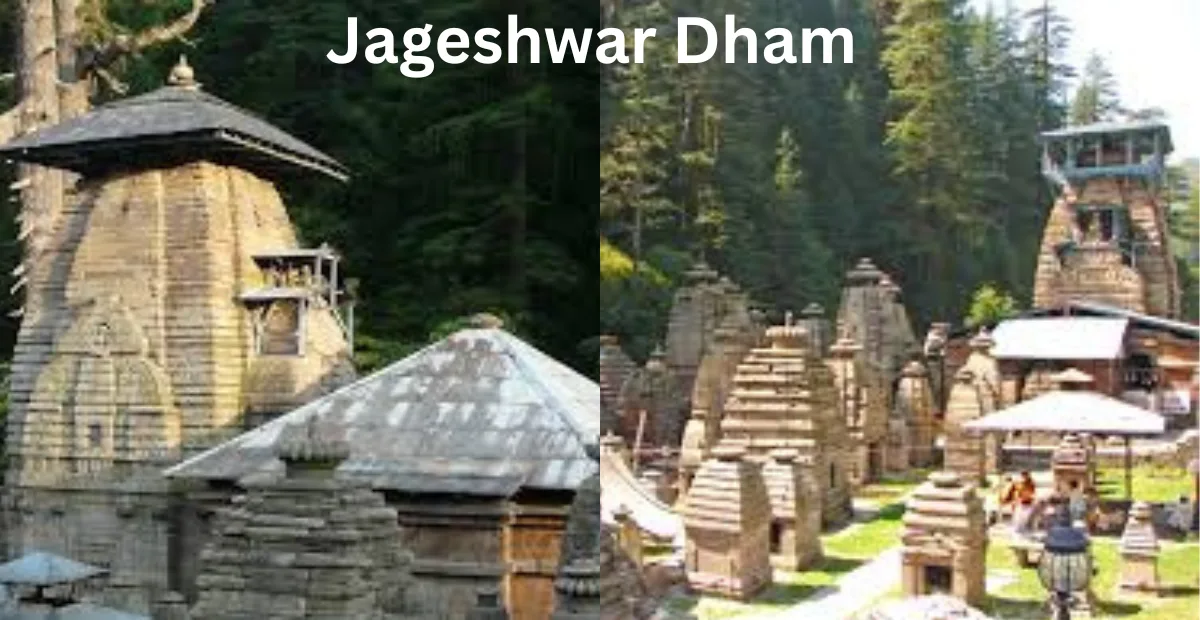
Jageshwar Dham: Ancient Shiva Temple
Jageshwar Dham Temple, near Almora in Uttarakhand’s Kumaon region, is one of India’s oldest Shiva temples. Peaceful Deodar forests surround a cluster of more than 100 ancient stone temples dedicated to Lord Shiva. Here, myth, Himalayan serenity, and centuries-old craftsmanship come together. The sound of temple bells, the flow of the Jata Ganga River, and the scent of cedar fill the air, creating a tranquil environment that draws both devotees and travelers seeking spiritual peace.
The Sacred Legend of Jageshwar Dham Temple
According to legend, the Sapta Rishis (seven sages) undertook intense penance in these forests, summoning Lord Shiva’s presence. Pleased with their devotion, Shiva appeared here as Jageshwar, which means “The Awakened Lord” (Jagrit Ishwar). It is believed that Shiva’s divine energy continues to resonate in the valley, offering peace and clarity to those who meditate there.
Locals also believe that the Pandavas and Lord Rama’s sons, Luv and Kush, once visited this site to perform rituals. Over many centuries, Jageshwar evolved into a major Shaiva pilgrimage destination, shrouded in myths, mantras, and mountain mists.
Is Jageshwar a Jyotirlinga? The Myth and the Mystery
People have long debated whether Jageshwar Dham is among the 12 Jyotirlingas of Lord Shiva, regarded as the holiest shrines where Shiva is believed to have manifested as a pillar of light. The Shiva Purana lists 12 Jyotirlingas across India, each symbolizing Shiva’s cosmic power.
Jageshwar Dham is not officially included among these twelve Jyotirlingas, but local traditions and ancient beliefs consider it the original Nagesh Jyotirlinga (Darukavanam) mentioned in scriptures. It matches this description because it is a forest where Shiva is worshipped as Nagesh. As a result, locals revere it as the ‘Nagesh Jyotirlinga of the Himalayas.’
Some people link “Nagesh” to Dwarka in Gujarat or Aundha Nagnath in Maharashtra, which leads to the ongoing confusion. However, spiritually, Jageshwar is equally significant for those who believe Lord Shiva’s energy is everlasting here.
Mentions of Jageshwar Dham in Ancient Hindu Scriptures
Several sacred texts and Puranas emphasize the holiness of the Jageshwar Dham temple.
- Shiva Purana mentions Nagesha Jyotirlinga appearing in a forest (Darukavanam), consistent with Jageshwar’s location.
- Skanda Purana (Kedar Khand) mentions Jageshwar as one of the 84 Mahadevas of the Himalayas and states that a darshan here equals the merit of performing a thousand yajnas.
- Manaskhand describes Jageshwar as the land of penance where Lord Shiva appeared to sages.
- Linga Purana describes the Himalayan homes of Shiva, using poetic language that matches Jageshwar’s landscape.
Thus, scripturally, Jageshwar is recognized as a Himalayan Kshetra (sacred region) blessed with the eternal presence of Lord Shiva.
Historical Significance of Jageshwar Dham Temple
Historians view Jageshwar Dham temple as more than just a spiritual retreat. It also functions as a living museum showcasing Himalayan temple art.
- The temples date from the 7th to 12th centuries CE, built during the Katyuri and early Chand dynasties.
- The Archaeological Survey of India (ASI) protects the site as a nationally important monument.
- Inscriptions in early Devanagari reveal royal donations and ongoing worship that spanned more than a thousand years.
- The temples display early Nagara-style architecture, featuring curved shikharas, intricately carved stone lintels, and small sanctums designed to blend with the mountain slopes.
- Scholars like Stella Kramrisch and D.C. Sircar identify Jageshwar as an essential center of the Pashupata Shaiva tradition, one of India’s earliest organized Shaivite sects.
All of this makes Jageshwar one of the oldest and best-preserved medieval temple complexes in northern India. It stands as proof of the fusion of spirituality and skilled stonecraft.
Spiritual Significance and Power of Darshan
A visit to Jageshwar Dham Temple is believed to awaken the inner consciousness.
The main Jageshwar Mahadev Temple houses the sacred Shiva Linga, while nearby shrines, including Dandeshwar, Mrityunjaya, Kuber, Chandika, and Pushti Devi, represent different divine aspects.
The gentle flow of the Jata Ganga River, the rustling pines, and the rhythmic temple bells create an atmosphere perfect for meditation and surrender.
It’s believed that darshan here grants liberation from sins and blesses devotees with peace and spiritual awakening.
How to Reach Jageshwar Dham
- By Air: Nearest airport – Pantnagar (150 km)
- By Train: Nearest railhead – Kathgodam (120 km)
- By Road:
- From Almora – 35 km
- From Nainital – 100 km
- From Delhi – 400 km (9–10 hours’ drive)
Best Time to Visit Jageshwar Dham
| March–June | Pleasant & cool | Ideal for pilgrimage & sightseeing |
| July–August | Rainy & misty | Lush greenery, but roads may be slippery |
| September–November | Clear & spiritual | Best visibility and festive season |
| December–February | Cold, occasional snow | Peaceful for spiritual seekers |
Nearby Tourist Places & Temples Around Jageshwar
Exploring Jageshwar Dham Temple is more than a spiritual journey — it’s also a gateway to some of Kumaon’s most scenic and culturally rich spots. Here are the top nearby places worth visiting:
1. Dandeshwar Temple (1.5 km)
The largest temple in the Jageshwar group, dedicated to Lord Shiva in his fierce form, Dandeshwar Mahadev. Its tall shikhara-style structure is an architectural masterpiece and offers a quiet spot for meditation by the Jata Ganga stream.
2. Vriddha Jageshwar (3 km)
Perched on a hill, this temple is believed to be the older form of Lord Jageshwar, where Shiva meditated before taking his youthful form in the valley below. The panoramic views of the Himalayas from here are stunning, especially at sunrise.
3. Kasar Devi Temple (35 km)
A peaceful spiritual center near Almora, Kasar Devi Temple, became famous after visits from Swami Vivekananda, Bob Dylan, and other seekers. The temple is located on a magnetic ridge — part of Earth’s Van Allen Belt — making it an ideal spot for meditation and energy alignment.
4. Almora (36 km)
Almora, the cultural capital of Kumaon, is famous for its cobbled streets, traditional Kumaoni architecture, and handcrafted goods. Visit Bright End Corner, Chitai Golu Devta Temple, and Govind Ballabh Pant Museum for a blend of spirituality and cultural heritage.
5. Binsar Wildlife Sanctuary (52 km)
A paradise for nature lovers and trekkers, Binsar features lush oak and rhododendron forests, along with breathtaking views of the Nanda Devi, Trishul, and Panchachuli peaks. The sanctuary also includes a serene Zero Point view tower and historic temples.
6. Patal Bhuvaneshwar Cave Temple (100 km)
One of the most mystical sites in Uttarakhand, this limestone cave temple near Gangolihat is believed to contain the forms of Lord Shiva, Vishnu, and Brahma within its intricate rock formations. Mentioned in the Skanda Purana, it’s said to be spiritually connected to Mount Kailash.
7. Katarmal Sun Temple (45 km)
An exquisite 9th-century temple dedicated to Surya, the Sun God, is situated near Almora. The carvings and symmetry resemble those of the Konark Sun Temple, making it an archaeological treasure for history and architecture enthusiasts.
8. Nainital (95–100 km)
A beautiful hill station known for Naini Lake, Snow View Point, and Naina Devi Temple. The famous Kaichi Dham and Golu Devta Temples are within 20 km of Nainital. It’s an ideal weekend getaway after a spiritual retreat at Jageshwar Dham.
9. Ranikhet (75 km)
A charming hill cantonment known for its golf course, Chaubatia Orchards, and Jhula Devi Temple. The serene pine forests and clear mountain air make it a rejuvenating detour.
10. Kausani (85 km)
Often called the “Switzerland of India”, Kausani offers sweeping Himalayan views, tea gardens, and the Anashakti Ashram, where Mahatma Gandhi once stayed. It’s a perfect mix of peace, scenery, and spirituality.
You can visit Dandeshwar and Vriddha Jageshwar on foot in the same day, while Almora, Kasar Devi, and Binsar make excellent day trips from Jageshwar.
For more extended stays, Ranikhet, Kausani, and Nainital are perfect hill escapes to include in your itinerary.
Travel Tips & Accommodation Near Jageshwar Dham
- Carry warm clothes, even in summer, because evenings can be cold.
- Wear comfortable shoes because of uneven footpaths.
- Avoid the monsoon months, if possible, because of landslide risks.
- Follow temple rules, as photography is prohibited inside the sanctums.
- Don’t miss nearby attractions such as Dandeshwar Temple, Vriddha Jageshwar, and Kasar Devi Temple.
Stay & Accommodation
There are simple guesthouses, dharamshalas, and eco-lodges near the Jageshwar Dham temple for pilgrims looking for a quiet stay.
If you want more amenities, you can stay in Almora or Kasar Devi, which are about an hour’s drive away. There, you’ll find boutique hotels, yoga retreats, and homestays with stunning Himalayan views.
Why You Should Visit Jageshwar Dham
Jageshwar Dham is more than just another temple visit. It offers a chance for spiritual awakening in the serene Himalayas. Whether you go as a pilgrim, a photographer, or a history enthusiast, this valley of ancient shrines will leave you in awe. The fragrance of cedar, the sound of flowing water, and the centuries-old chants create one of the purest spiritual experiences in the Himalayas.
Plan your pilgrimage to Jageshwar Dham temple today and experience the divine energy of Lord Shiva in the heart of the Himalayas.
Frequently Asked Questions (FAQs) about Jageshwar Dham Temple
Q1. Where is Jageshwar Dham Temple located, and what is its natural setting?
Jageshwar Dham Temple is located in the Almora district of Uttarakhand’s Kumaon region, at an altitude of about 1,870 meters (6,135 feet) above sea level. The temple complex is surrounded by dense deodar (cedar) forests, with the sacred Jata Ganga stream flowing through the valley. This eco-protected area maintains its mystical tranquility, fresh air, and natural purity — making it an ideal place for meditation and spiritual retreat.
Q2. Is Jageshwar Dham one of the 12 Jyotirlingas of Lord Shiva?
Jageshwar Dham is not officially listed among the twelve Jyotirlingas mentioned in the Shiva Purana. Still, many devotees and locals believe it to be the original Nagesh Jyotirlinga (Darukavanam) described in ancient texts. Its serene Himalayan setting and spiritual aura make it one of the most sacred Shiva temples in North India.
Q3. Which are the 12 Jyotirlingas of Lord Shiva?
The 12 Jyotirlingas, symbolizing Lord Shiva’s infinite light and energy, are Somnath (Gujarat), Mallikarjuna (Andhra Pradesh), Mahakaleshwar (Madhya Pradesh), Omkareshwar (Madhya Pradesh), Kedarnath (Uttarakhand), Bhimashankar (Maharashtra), Kashi Vishwanath (Uttar Pradesh), Trimbakeshwar (Maharashtra), Baidyanath (Jharkhand), Nageshwar (Gujarat), Rameshwaram (Tamil Nadu), and Grishneshwar (Maharashtra). Each shrine has its legend and spiritual significance.
Q4. What is the historical and religious significance of Jageshwar Dham?
Jageshwar Dham Temple, located in the Almora district of Uttarakhand, is an ancient complex comprising over 120 stone temples dedicated primarily to Lord Shiva. Believed to date back to the 7th–12th centuries CE, it was a vital center of Shaivism in the Kumaon Himalayas. Historians link it to the Katyuri and Chand dynasties, while devotees regard it as the divine meditation site of Lord Shiva himself.
Q5. Why is Jageshwar Dham also called the “Valley of Gods”?
Dense deodar forests and mountain streams surround the entire Jageshwar valley, creating an ethereal atmosphere. Ancient inscriptions and Puranic references indicate that this region was a sacred place for meditation by sages and gods — hence the name “Dev Bhoomi” (Land of Gods) or “Valley of Gods.”
Q6. What is the best time to visit Jageshwar Dham?
The best time to visit Jageshwar Dham Temple is between March and June or September and November, when the weather is pleasant and ideal for exploring the temples. Winters (December–February) can be cold and snowy, but they offer a peaceful, mystical charm for spiritual seekers.
Q7. How can I reach Jageshwar Dham?
Jageshwar Dham Temple is approximately 35 km from Almora, 100 km from Nainital, and 400 km from Delhi. The nearest railway station is Kathgodam (120 km), and the closest airport is Pantnagar (150 km). From Almora or Nainital, taxis and buses regularly run to Jageshwar.
Q8. Are there stay options near Jageshwar Dham?
Yes, pilgrims can stay at KMVN guesthouses, forest resthouses, and budget lodges located near the Jageshwar Dham temple complex. Almora, located about an hour’s drive away, also offers comfortable hotels and homestays for those seeking more amenities.