
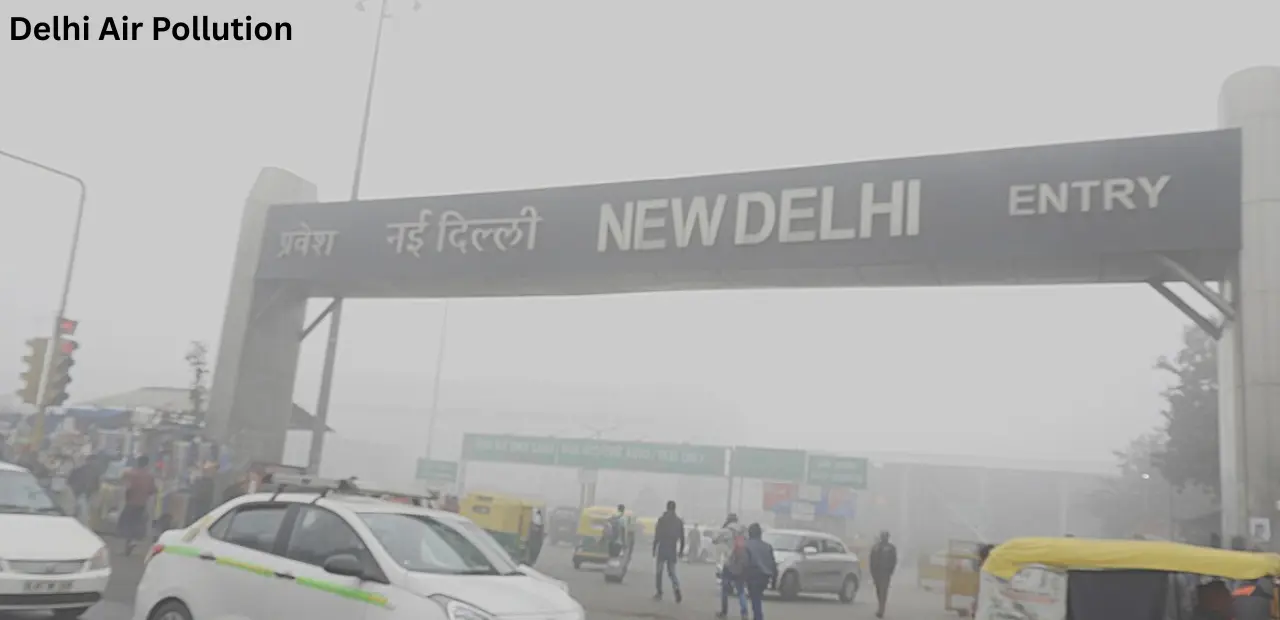
Introduction — When the Capital Turns into a Gas Chamber
Each winter, the Delhi AQI (Air Quality Index) drops to “severe” levels, making the capital one of the most polluted places in the world. A gray blanket of smog covers Delhi and much of North India, reducing visibility and choking millions. Despite repeated government efforts, the air pollution crisis returns each year with alarming regularity — a health and economic disaster that persists.
How Pollution Levels Are Measured: The Science Behind Delhi AQI
Air pollution is assessed using the Air Quality Index (AQI). This standardized scale measures key pollutants, including PM₂.₅, PM₁₀, nitrogen dioxide (NO₂), sulfur dioxide (SO₂), ozone (O₃), carbon monoxide (CO), and ammonia (NH₃).
- AQI Categories (as per CPCB):
- 0–50 → Good
- 51–100 → Satisfactory
- 101–200 → Moderate
- 201–300 → Poor
- 301–400 → Very Poor
- 401–500 → Severe / Hazardous
A healthy AQI should ideally stay below 100. However, during peak winter months, the Delhi AQI often surpasses 450–500, reaching the “Severe Plus” category — levels that are dangerous even for healthy people.
Delhi AQI Today: A Snapshot of the Crisis
According to the Central Pollution Control Board (CPCB) and IQAir’s 2024 report, Delhi’s average PM₂.₅ concentration is about 91.6 µg/m³, far surpassing the WHO’s safe limit of 5 µg/m³.
Currently, the Delhi & NCR AQI often varies between 380 and 480, making it one of the most polluted capital cities in the world.
Despite short-term fluctuations caused by wind and weather, the city consistently ranks in the top five globally for poor air quality.
Why Delhi AQI Plummets Every Winter: Long- and Short-Term Causes
1. Stubble Burning in Punjab & Haryana
Every October–November, after the rice harvest, farmers in Punjab and Haryana burn crop residue to quickly clear their fields. This stubble burning releases large amounts of particulate matter and carbon compounds, which drift toward Delhi due to northwesterly winds.
Studies show that up to 40% of Delhi’s winter pollution can be linked to crop residue burning during peak season.
2. Vehicular and Industrial Emissions
With over 12 million registered vehicles, Delhi’s traffic significantly raises PM₂.₅ and NO₂ levels. Diesel vehicles, old trucks, and two-wheelers are major contributors. Industries around NCR, especially those using dirty fuels, further worsen the Delhi AQI.
3. Construction Dust and Road Dust
Large-scale construction projects, including metro lines, expressways, and high-rises, produce dust particles. During periods of high pollution, the Delhi government suspends construction work, resulting in income loss for workers, project delays, and increased costs.
4. Meteorological Factors
In winter, temperature inversion traps pollutants near the ground. Calm winds and low temperatures prevent the dispersion, forming a “pollution dome” over the city.
5. Firecrackers and Festivals
Despite bans, Diwali fireworks cause PM₂.₅ levels to spike overnight, pushing Delhi’s AQI into the “severe” range within hours.
Government Measures to Control Delhi AQI
Central Government Initiatives
- Graded Response Action Plan (GRAP): A tiered emergency plan that restricts construction, vehicle movement, and industrial activities based on AQI levels.
- Commission for Air Quality Management (CAQM): Supervises inter-state coordination, especially regarding stubble burning.
- BS-VI fuel standards and electric vehicle policy implementation.
Delhi Government Measures
- Odd-Even Vehicle Scheme: Alternating vehicle movement based on number plates.
- Smog Towers: Air filtration installations in Connaught Place and Anand Vihar.
- Construction Ban and School Closures during severe pollution.
- Pusa Decomposer: A bio-enzyme developed to decompose crop residue, reducing farm fires.
Cloud Seeding and Artificial Rain: Delhi’s New Experiment
In 2025, the Delhi government initiated cloud seeding experiments with IIT Kanpur to produce artificial rain, thereby helping to settle dust and improve air quality.
However, weather conditions were unfavorable, and the trials had limited success.
Officials have announced plans for another round of cloud seeding during the 2025 winter season, depending on favorable weather conditions, to reduce Delhi’s AQI levels temporarily.
Impact of Poor Delhi AQI on Health and Economy
Health Impacts
- Increased cases of asthma, bronchitis, and chronic obstructive pulmonary disease (COPD)
- Rising heart attack and stroke incidents due to long-term exposure
- Reduced immunity and cognitive decline in children
- Estimated life expectancy loss of up to 10 years for residents exposed long-term
Economic Impacts
- Construction and transport bans cause substantial economic losses — halting real estate projects and daily wages for laborers.
- Increased healthcare costs for respiratory illnesses.
- Reduced tourism and business productivity due to smog-related disruptions.
According to a World Bank report, air pollution costs India nearly 8% of its GDP in lost productivity and healthcare costs — a significant burden on both health and the economy.
Is Delhi the Most Polluted City in the World?
While Delhi is the most polluted capital city globally, several smaller Indian towns, such as Byrnihat (on the Meghalaya-Assam border) and Begusarai (in Bihar), recorded higher PM₂.₅ levels.
Still, Delhi remains a symbol of urban air crisis, representing India’s larger struggle for clean air.
The Way Forward
The battle for clean air requires a multi-pronged, year-round strategy, not just seasonal firefighting.
Sustainable agriculture incentives, faster EV adoption, strict industrial monitoring, and interstate cooperation are vital.
Until then, Delhi’s AQI will serve as a stark reminder that clean air should be a fundamental right, not a luxury.
FAQs on Delhi AQI and Air Pollution
1. What is the safe AQI level for daily outdoor activity?
An AQI below 100 is generally regarded as safe. Anything above 200 is unhealthy, especially for children, the elderly, and those with heart or lung conditions.
2. Can air purifiers help reduce indoor pollution?
Yes. HEPA-filter-based air purifiers can significantly lower indoor PM₂.₅ levels by up to 90%, providing some relief during high Delhi AQI days.
3. Why does Delhi’s pollution rise suddenly after Diwali?
The combination of firecracker smoke, low wind speed, and temperature inversion after Diwali traps pollutants near the ground, resulting in a rapid increase in the AQI.
4. What is the role of stubble burning in worsening Delhi AQI?
During October–November, stubble burning in neighboring states contributes up to 40% of Delhi’s particulate pollution, especially when wind patterns carry smoke toward NCR.
5. Is Delhi’s cloud seeding experiment likely to work in the future?
Experts say that artificial rain can offer temporary relief if the cloud density and humidity are sufficient. However, it’s not a permanent fix for Delhi’s pollution issues.
6. What can citizens do to reduce exposure during severe AQI days?
Avoid outdoor activities, wear N95 masks, keep windows closed, use air purifiers, and stay well-hydrated to flush out toxins.