
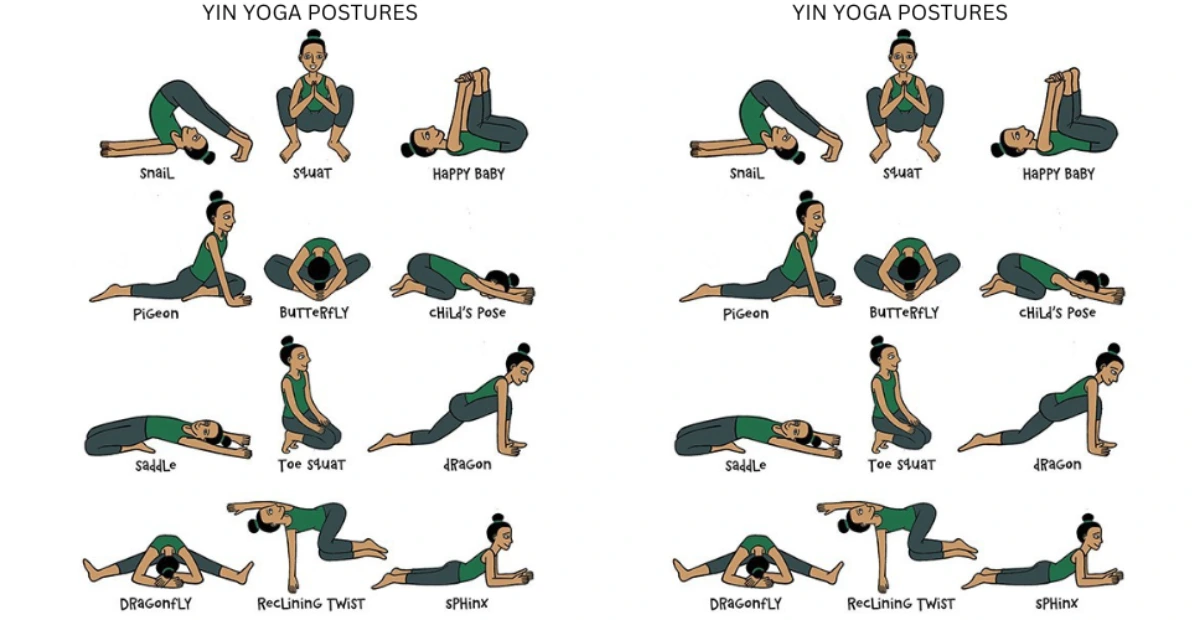
Introduction
Yin Yoga poses differs from other fast-paced yoga techniques. It focuses on quiet, meditative poses that calm the mind, alleviate tension, and nourish the body.
This article tells you what Yin Yoga is, what its main benefits are, poses that are easy for beginners, and how you can improve your practice by becoming a Yin Yoga teacher.
What Is Yin Yoga
Yin Yoga is a slow-paced practice where you hold postures (asanas) for 3 to 7 minutes.
Yin Yoga doesn’t rely on muscle strength; instead, it works on the deeper tissues of the body, like ligaments, joints, and bones. This makes you more flexible and gives you more energy. Traditional Chinese Medicine inspires Yin Yoga, working with the body’s energy channels to restore balance and energy.
Yin Yoga complements well alongside more active styles, such as Vinyasa or Power Yoga. It offers a helpful balance for anyone with a busy, fast-paced life.
Key Yin Yoga Benefits for Body and Mind
Deep Relaxation and Stress Relief
Holding Yin Yoga poses for an extended period helps calm your body, lower stress hormones, and reduce anxiety.
Many practitioners refer to it as “moving meditation.”
Improved Flexibility and Mobility
Yin Yoga poses help to relax tense hips, knees, and shoulders by gently stretching the deeper tissues in your body. This is especially beneficial for individuals who spend a lot of time sitting.
Supports Emotional Healing
Being still can help you notice and release hidden emotions without judgment.
Enhances Circulation and Energy Flow
Yin Yoga poses help your energy flow more smoothly through your body, which can make you feel more lively and support your overall health.
Better Sleep Quality
Yin Yoga before bed is a natural technique to help you overcome sleep difficulties, as it prepares your body for deep, restful sleep.
Mindfulness and Inner Awareness
Staying in Yin Yoga poses for a few minutes every day helps you build patience, accept things as they are, and think more clearly in everyday life.
Yin Yoga vs. Other Styles
- Hatha Yoga – Focuses on alignment and moderate pose duration.
- Vinyasa/Power Yoga – Dynamic, strength-building flows.
- Restorative Yoga – Utilizes props for complete relaxation.
What makes Yin Yoga unique is its focus on passive, long-held stretches and a calm, meditative approach.
Beginner-Friendly Yin Yoga Poses
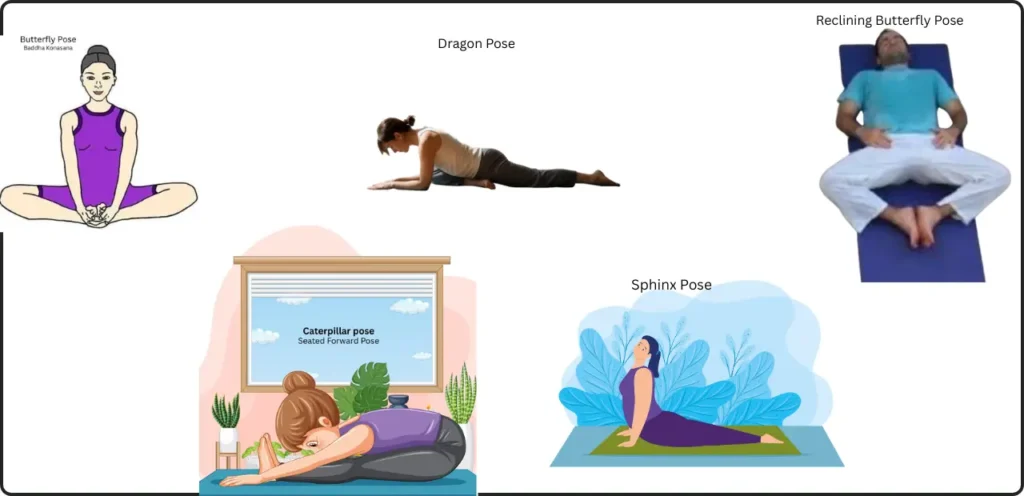
1. Butterfly Pose (Baddha Konasana)
Benefits:
- Gently opens the hips, inner thighs, and lower back.
- Helps release tension from long hours of sitting.
- Stimulates the kidney and bladder meridians (TCM benefits).
- Encourages relaxation and emotional release by grounding the body.
2. Dragon Pose (Low Lunge Variation)
Benefits:
- Deeply stretches the hip flexors, quadriceps, and groin.
- Improves mobility in the hips and pelvis.
- Stimulates the stomach, spleen, and kidney meridians.
- Helps release stored stress and emotions linked to the hips.
3. Caterpillar Pose (Seated Forward Fold)
Benefits:
- Lengthens the spine and stretches the hamstrings.
- Calms the nervous system and reduces mental chatter.
- Stimulates the urinary bladder meridian for energy flow.
- Promotes introspection and patience by holding stillness.
4. Sphinx Pose
Benefits:
- Gently compresses and strengthens the lower back.
- Opens the chest and stimulates the heart and lung meridians.
- Improves spinal mobility and posture.
- Energizes the body while reducing fatigue.
5. Reclining Butterfly Pose (Supta Baddha Konasana)
Benefits:
- Deeply relaxes the hips, chest, and nervous system.
- Excellent for reducing anxiety, stress, and insomnia.
- Enhances circulation in the pelvic region.
- Promotes emotional balance and a meditative state.
Practice Tips
- Focus on stillness and slow breathing.
- Use cushions or blocks for support.
- Move only to a mild limit and don’t hurt yourself.
- Even 20–30 minutes a few times a week brings results.
Yin Yoga Teacher Training: Deepen & Share Your Practice
If you want to take your practice beyond your own, Yin Yoga teacher training helps you learn the concepts, foundational bodywork, and teaching skills behind this healing style.
Why Consider Teacher Training
- Deepen Your Practice: Learn more about how the body’s deeper tissues and energy channels function, and how to be more aware.
- Share the Benefits: Teach classes that help students relax, release stress, and improve flexibility.
- Professional Growth: Get the chance to teach in studios, at wellness retreats, or online.
What You’ll Learn
- The basics of Yin Yoga and its TCM roots.
- Understanding how the body’s deeper tissues function and how to change poses safely.
- Breathing exercises, meditation, and how to plan classes for all levels.
- Ways to Make Your Class Feel Calm and Welcoming
Yin Yoga Teacher Training Options
- Online Yin Yoga Teacher Training: Flexible 30–50 hour programs for home study.
- In-Person Full Immersion 100–300-hour courses are offered all over the world for Yin Yoga instructors or those looking to deepen their personal practice. The 200-hour teacher training program offers a life-changing experience for the mind, body, and career.
With so many deadlines and digital distractions, Yin Yoga is a great way to slow down, breathe, and reconnect with yourself. When you practice deep breathing, you can reconnect with yourself.
It’s ideal for:
- Professionals seeking stress relief.
- Beginners wanting a mild yet powerful practice.
- Athletes need flexibility and recovery.
- Anyone dealing with anxiety, insomnia, or restlessness.
Conclusion: Your Path to Stillness and Growth
Yin Yoga is more than exercise. It promotes a way of living focused on mindfulness and healing.
With consistent practice, you’ll enjoy greater flexibility, experience less stress, and maintain emotional balance.
And if you’re ready to take the next step, Yin Yoga teacher training can turn your passion into a rewarding path of teaching and self-discovery.
Roll out your mat, take a deep breath, and let Yin Yoga lead you to stillness. It can be the perfect remedy for a busy, modern life.
FAQs on Yin Yoga poses & Teacher Training
Q1. Is Yin Yoga good for beginners?
Yes, Yin Yoga is beginner-friendly because it uses slow, long-held poses that don’t require advanced flexibility or strength.
Q2. What are the main benefits of Yin Yoga?
Yin Yoga improves flexibility, reduces stress, enhances circulation, supports emotional balance, and promotes better sleep.
Q3. How is Yin Yoga different from Restorative Yoga?
Both are calming, but Yin Yoga gently stresses connective tissues to improve flexibility, while Restorative Yoga focuses on complete relaxation using props.
Q4. How long should beginners hold Yin Yoga poses?
Beginners can start with 2–3 minutes per pose and gradually increase to 5–7 minutes as their comfort level improves.
Q5. Can Yin Yoga help with anxiety and insomnia?
Yes, its slow pace activates the parasympathetic nervous system, which calms the mind, reduces anxiety, and supports restful sleep.
Q6. What is Yin Yoga teacher training?
It’s a certification program that teaches you the philosophy, anatomy, sequencing, and teaching skills of Yin Yoga, enabling you to guide others in practice.
Q7. How long does Yin Yoga teacher training take?
Online courses are usually 30–50 hours, while in-person certifications can range from 100 to 200 hours.
Q8. Do I need prior yoga experience for Yin Yoga teacher training?
Basic yoga knowledge is helpful but not always required. Many programs welcome beginners who want to deepen their practice.
Q9. Can I do Yin Yoga every day?
Yes, Yin Yoga can be practiced daily. Even 20–30 minutes a few times a week can bring noticeable results.
Q10. Who should avoid Yin Yoga?
People with recent injuries, joint issues, or certain medical conditions should consult a healthcare professional before starting.