
Introduction
Medicinal Plants and Fruits for Daily Consumption have been widely recognized in Ayurveda and modern herbal practices for their ability to boost immunity and promote overall health. Rich in antioxidants, vitamins, and healing compounds, these natural home remedies not only strengthen the immune system but also support heart health, improve digestion, and reduce stress. Integrating them into your daily life offers a holistic approach to achieving long-term vitality.
1. Ashwagandha (Withania somnifera) – The Stress Reliever
Key Benefits
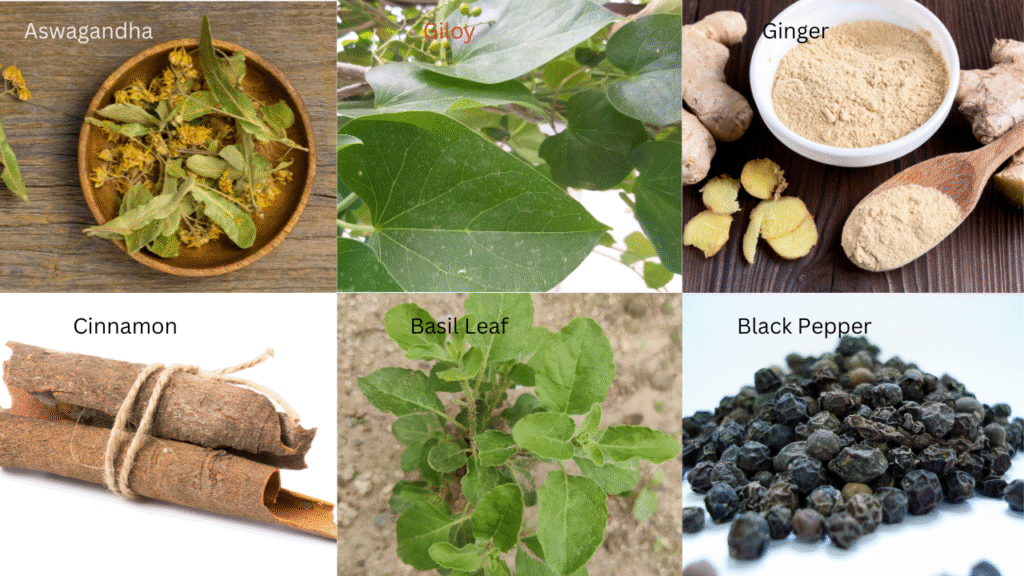
Ashwagandha is a revered adaptogenic herb in Ayurveda. Its powerful stress-reducing properties put it in the category of medicinal plants and fruits for daily consumption. Its roots are used for the treatment of cough, dropsy, rheumatism, skin disorders, female disorders, enhancing stamina, improving sleep quality, supporting thyroid function, and boosting immunity.
Its external application in inflammatory conditions, such as ulcers and scabies, provides soothing relief. Its leaves are also used as a febrifuge to treat injuries, swellings, and sore eyes.
Short-term use (up to 3 months) of Ashwagandha, under the guidance of a healthcare professional, is considered safe.
Caution
Pregnant and breastfeeding women should avoid taking Ashwagandha. Also, people with autoimmune or thyroid disorders should avoid taking Ashwagandha.
2. Giloy (Tinospora cordifolia) – The Immunity Booster
Key Benefits
Giloy (Giloe) is also called Guduchi, Amrita, Amritvallari, etc. Its stem extract is primarily used to treat fevers, particularly those caused by dengue and malaria. It strengthens the immune system, regulates blood sugar levels, rejuvenates skin, detoxifies the liver, and improves digestion. Its anti-inflammatory and antipyretic properties place it in the category of medicinal plants and fruits for daily consumption, and it is a must-have in every herbal medicine kit.
Caution
Patients with autoimmune, diabetes, and hypoglycemia issues should consult healthcare professionals before taking Giloy or Giloe. Pregnant women should also avoid taking it.
3. Ginger (Zingiber Officinale Roscoe) – The Digestive Dynamo
Key Benefits
Ginger, Hindi name Adrak, can easily be included in the most valued category of medicinal plants and fruits for daily consumption. Known for its digestive benefits, its dried form is called Saunth or Sunthi. It eases cold & cough, nausea, reduces motion sickness, and relieves indigestion. With powerful anti-inflammatory compounds like gingerol, it also helps reduce pain and improve joint health.
Caution
Taking excessive amounts of ginger can cause mild side effects, including bloating, diarrhea, heartburn, and stomach discomfort, as well as skin rashes in some cases.
4. Cinnamon (Cinnamomum Verum) – The Sweet Healer
Key Benefits
Cinnamon, also called Dalchini, is not just a delicious spice—it’s a potent antioxidant. It helps regulate blood sugar, making it beneficial for people with type 2 diabetes. Some studies found that cinnamon has properties to reduce triglyceride and total cholesterol levels, two known risk factors for heart attacks. Its antimicrobial properties support oral health, and it may even improve cognitive function. Its inner bark is used as a spice, and leaf oil is used in the scent industry.
Caution
Coumarin, richly found in Cassia cinnamon, is considered safe if taken in a permitted level of 1.5 mg for an adult weighing 60 Kg. Consuming excessive Cassia cinnamon may cause lower blood sugar, mouth sores, and liver toxicity. Eating dry and ground cinnamon in large quantities in a single sitting may cause breathing problems if accidentally inhaled.
5. Tulsi (Ocimum Sanctum) – The Holy Basil
Key Benefits
A sacred plant in Indian households, Tulsi is also known as Vishnu Priya in Hindu mythology or Holy Basil. It is a potent natural remedy for respiratory issues. Its leaves, mixed with honey, give relief in asthma, colds, and bronchitis. Tulsi also has antibacterial, antifungal, and anti-inflammatory properties and helps in managing stress and anxiety.
Caution
Owing to its blood-thinning and blood sugar-lowering properties, people with certain medical conditions should avoid taking Tulsi. Pregnant women should also avoid taking Tulsi as it may harm their hormone levels.
6. Black Pepper (Piper Nigrum) – The Bioavailability Enhancer
Key Benefits
Often called the “King of Spices,” Black Pepper is called Kali Mirch in Hindi. It enhances the absorption of nutrients, particularly curcumin from turmeric. It aids digestion, stimulates appetite, and acts as a natural remedy for colds and coughs. Essential Oil of Black Pepper helps in enhancing blood circulation.
Caution
Black Pepper or Kali Mirch is considered safe, but if taken in large amounts, it can cause a burning sensation in the stomach. It may cause choking, especially in children, if it accidentally gets into the lungs. People having Inflammatory Bowel Disease (IBD) or sensitive to spices should avoid taking Black Pepper.
7. Black Cumin (Nigella Sativa) – The Seed of Blessing
Key Benefits
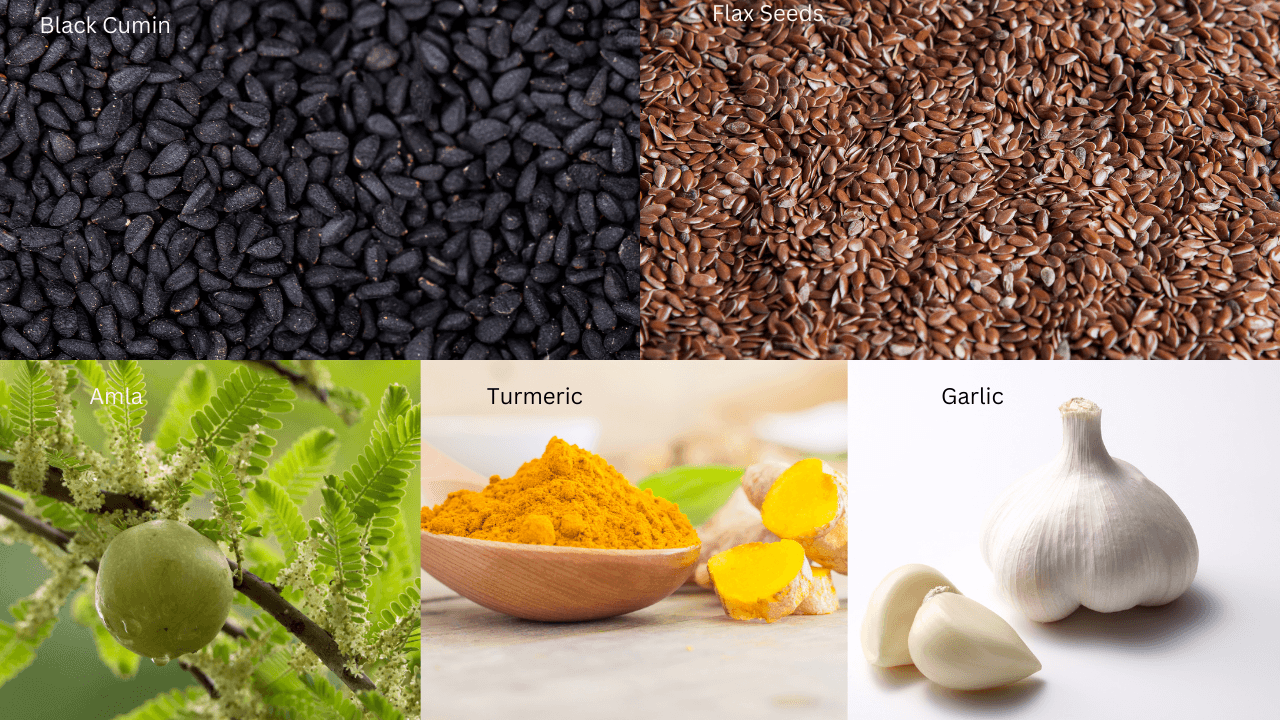
Black Cumin, commonly known as Black seeds, Kalonji, or Kala Jeera, is known for its immune-modulating properties. It helps control blood pressure, balances cholesterol, and supports liver health. Its active compound, thymoquinone, has powerful anti-inflammatory and antioxidant effects.
Caution
Black seed is generally safe, but if taken in large quantities, it can cause allergic rashes in some people. It can also cause stomach upset, constipation, and vomiting in some cases.
8. Amla (Phyllanthus Emblica) – The Vitamin C Powerhouse
Key Benefits
Amla or Indian Gooseberry is also one of the medicinal plants and fruits for daily consumption. It holds a unique place in Indian Ayurvedic, Turkish, Unani, and Tibetan medicinal methods. It is full of ascorbic acid, a superfruit rich in vitamin C and antioxidants. It strengthens the immune system, promotes healthy skin and hair, and aids digestion. It also supports heart health and helps manage diabetes.
Caution
People with health issues and on medications should consult doctors before taking Amla. Skin allergy, gastro issues, acidity, and dehydration are some common problems caused by high fiber content, Vitamin C, and diuretic properties present in Amla.
9. Turmeric (Curcuma Longa) – The Golden Healer
Key Benefits
The Hindi name of Turmeric is Haldi and is well known for its anti-inflammatory and antioxidant properties. Largely due to the active compound curcumin, Haldi is best used to treat hay fever symptoms e.g., runny nose, sneezing, headache, congestion, and gives immense relief in arthritis, improves brain function, and supports liver detoxification. It also speeds up wound healing and reduces skin inflammation.
Caution
Consulting a healthcare professional is always the best course of action before taking turmeric supplements. Some common side effects related to turmeric are possible blood thinning, iron deficiency, and allergic reactions. Pregnant women should avoid using medicinal amounts of turmeric.
10. Garlic (Allium Sativum) – The Heart Protector
Key Benefits
Garlic, commonly known as Lahsun in Hindi, has natural antibiotic and anticarcinogenic properties. A heart-friendly herb, it helps reduce weight, blood pressure, and cholesterol, and prevents atherosclerosis. It also helps the body in excreting the heavy metals, thus curtailing the risk factors. Asthmatic patients can benefit a lot from Garlic. It is also effective against common colds and boosts the body’s natural defenses. For better results, it should be taken raw, but cooked garlic also gives good results to boost our immunity and prevent many ailments.
Caution
Eating garlic may result in bad breath. Excessive use may also irritate the digestive system and sometimes cause heartburn, risk of bleeding, and allergic reactions.
11. Flax Seeds (Linum Usitatissimum) – The Omega-3 Source
Key Benefits
Flax (Alsi) seeds are rich in omega-3 fatty acids, lignans, and fiber. It is also rich in protein, iron, calcium, manganese, and phosphorus.
Linseed oil, derived from flax seeds, is used in cooking food and also in the production of paints, printing inks, and varnish printing inks.
Flax seeds can be eaten both raw and cooked. They improve heart health, support digestive wellness, and balance hormones. Flax seeds are also beneficial in reducing inflammation and aiding weight management.
Caution
Flax seeds can act like the hormone estrogen, making them hormone-sensitive; health care professionals suggest that women suffering from ovarian cancer or during pregnancy should avoid consuming them.
Conclusion
These 11 medicinal plants and fruits for daily consumption are not the only ones to give natural healing; many other plants also have strong healing properties. Modern medicine plays a vital role, and integrating these time-tested herbs into our day-to-day lifestyle can offer preventive care to promote overall well-being. However, consulting a healthcare provider before starting any herbal regimen, especially if you’re on medication or managing a health condition, is advisable.
Start including these 11 medicinal plants and fruits for your daily consumption. Which one do you use daily? Tell us in the comments!